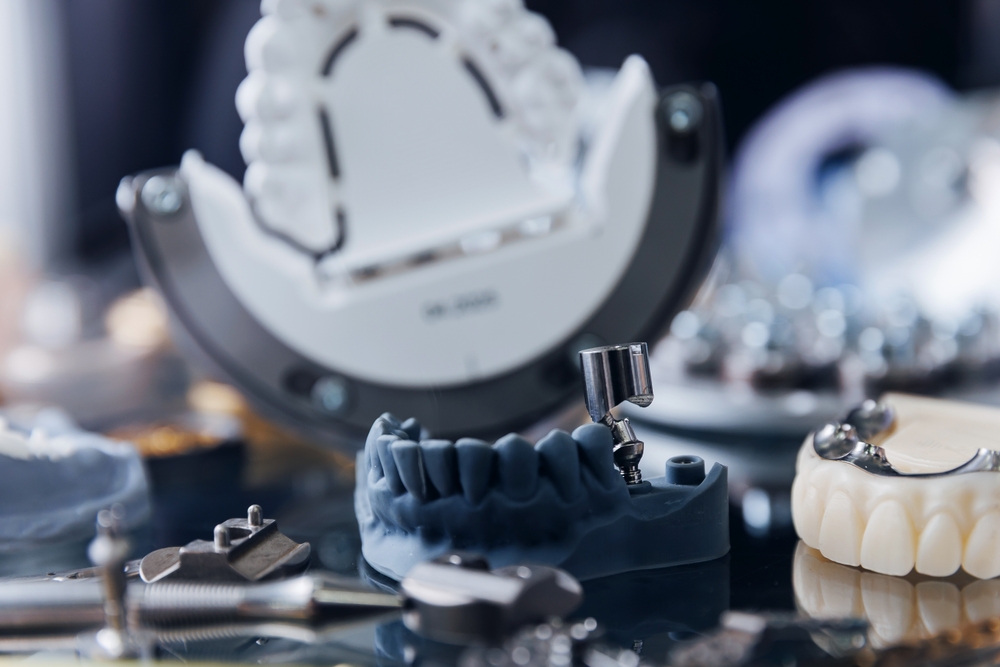
When facing tooth loss, choosing a replacement method is one of the most critical decisions you will make for your health.
While traditional options like removable dentures or dental bridges have been used for decades, they only fix the surface appearance of a smile, whereas, dental implants are widely considered the healthiest and most permanent solution available today.
The Hidden Danger of Missing Roots
To understand why dental implants are unique, you must first look at what happens when a natural tooth is lost.
A tooth is not just a visible chewing surface; it includes an extensive root system deeply embedded within your jawbone. Every time you chew, these natural roots transmit mechanical forces down into the bone tissue.
This constant pressure acts as a vital biological signal, telling the body to continuously send calcium and essential nutrients to keep the jawbone dense, thick, and strong. The moment a tooth root is removed, this stimulation stops completely.
Without this vital chewing pressure, the body assumes the jawbone is no longer needed, causing it to naturally break down and shrink away. This progressive bone loss causes the remaining healthy teeth to shift out of alignment, disrupts the bite mechanics, and can eventually lead to a collapsed, aged facial structure.
Why Implants Excel?
The Root Solution:
Dental implants are the only tooth replacement method specifically engineered to solve this hidden bone loss problem. Because an implant post is made of biocompatible titanium, the living jawbone naturally fuses directly to its metallic surface over time.
By replacing the missing root structure, a dental implant provides the exact same mechanical stimulation as a natural tooth. This biological integration achieves several life-changing benefits that traditional alternatives cannot provide:
Halts Jawbone Degradation:
Implants actively signal the body to maintain bone density, preserving natural facial shape and youthfulness.
Protects Surrounding Teeth:
Traditional bridges require grinding down healthy neighbouring teeth to act as anchor pegs. Implants are entirely self-supporting, leaving healthy teeth completely intact.
Eliminates Slippage and Discomfort: Unlike dentures that shift, implants are locked firmly into your bone, allowing clear speech and chewing with absolute confidence.
A Long-Term Financial Investment
In contrast, a dental implant is built to last a lifetime. By investing in an implant today, you eliminate the repetitive future costs of replacements, relines, and adjustments, while permanently protecting your overall health.
Dental prosthetics like crowns and bridges serve as the foundational cornerstone for restoring oral function, structural integrity, and dental aesthetics when teeth are compromised or missing.
These fixed restorations are highly customized to individual jaw mechanics, permanently cementing onto existing teeth or dental implants to re-establish a seamless, natural bite.
Dental Crowns:
A dental crown is a custom-fabricated cap fixed directly over a single damaged tooth to encase its entire visible structure above the gumline.
Dental Bridges:
A dental bridge is a fixed prosthetic configuration comprising of several Dental Crowns, used to replace one or more missing teeth in a single row by anchoring on neighbouring teeth.
Components:
A standard bridge consists of two main components: abutments (the supporting teeth on either side of the empty space) and pontics (the artificial replacement teeth suspended between them).
Why Dental Bridges?
Integrating crowns and bridges into an oral rehabilitation framework achieves critical biomechanical advantages:
Full mouth rehabilitation (also called full mouth reconstruction) is a highly customized, comprehensive dental treatment designed to rebuild, restore, and repair all of the teeth in both the upper and lower jaws. It combines restorative dentistry with cosmetic procedures to simultaneously optimize oral function, structural health, and aesthetics.
Unlike single-tooth procedures, this treatment views the mouth as a singular dynamic system, correcting the bite (occlusion) and the relationship between the jaws.
When is a Full Mouth Rehabilitation Necessary?
Dentists recommend full mouth rehabilitation when oral health has deteriorated extensively due to:
A Step-by-Step Treatment Plan may include:
Common Procedures Used in Rehabilitation
Depending on individual cases, a multidisciplinary dental team may is deployed, a mix of the following specialties and treatments:
Our teeth cannot heal themselves from decay or trauma.
Fillings are necessary to intervene when these issues arise:
Benefits of Dental Fillings
Addressing dental issue early with a filling offers significant long-term health advantages:
We always take care of your smile
+91 93629 05001
- Tirunelveli – Palayamkottai Market | Melapalayam | Karaieruppu
- Chennai – Kodambakkam
- Kanyakumari – Kuzhithurai Junction
Copyright © 2026 All Rights Reserved.